ATMs in Hong Kong: Credit cards and fees
Hong Kong is known as a financial capital of the world, so visitors there don’t need to worry too much about being able to access their money. While debit and...


Planning a trip to Hong Kong? You’re probably putting together a travel budget to ensure you’ve got all your expenses covered while you’re there. Whatever you plan to spend, it’s helpful to know how locals tend to pay for everyday purchases. While some countries still rely heavily on cash, others have made a wide range of cashless payment methods part of everyday life.
Card payments are widely accepted in Hong Kong, but cash is still used in certain situations. You’ll also find a number of popular local payment options. We’ll take a closer look at your options to help answer the question - Which is more convenient, cash or card in Hong Kong?
We’ll also introduce the Wise card, a cost-effective option for spending abroad or online. It allows you to pay and withdraw cash like a local in 150+ countries, with low, transparent fees* and the mid-market exchange rate.
Learn more about the Wise card 💳


Hong Kong isn’t cash-centric, but it’s not fully cashless either. Credit cards and e-wallets make up around 88% of POS payments, while cash accounts for around 6%.1
Tipping isn’t mandatory in Hong Kong and locals generally don’t expect it. At restaurants, a 10% service charge is often included in the bill, so there’s usually no need to tip extra. At casual eateries, cafés and bars, tipping is generally not expected, although rounding up or leaving a small amount for good service is appreciated.2
If you’re paying in cash, carrying smaller notes and coins is useful, particularly for taxis, where drivers may have limited change. Passengers typically round the fare up rather than leaving a percentage-based tip. For hotel staff, 10 to 20 HKD per bag is a reasonable tip for help with luggage, while tipping at salons and spas is optional.2
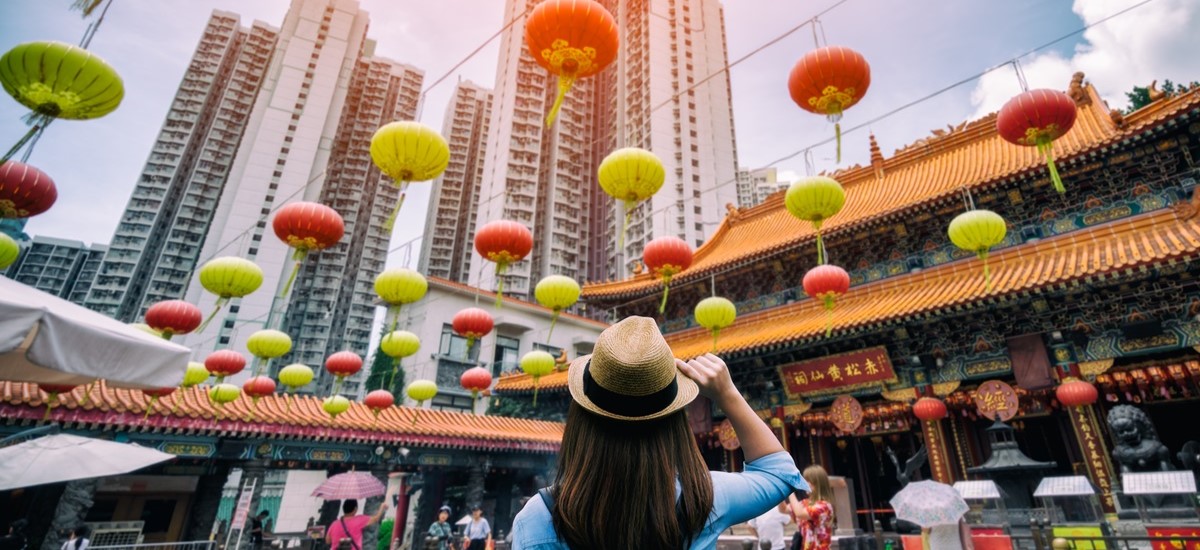
We’ve listed some common situations where you’ll be paying for things in Hong Kong. Here’s whether you’ll be able to pay by card, in cash or both:
| Paying for… | Card💳 | Cash👛 |
|---|---|---|
| 🚕 Taxis3 | Sometimes | Yes |
| 🏪 Convenience stores4 | Usually, yes | Yes |
| 🏰 Hong Kong Disneyland5 | Yes | Yes |
| 🚌 Public transport | Yes6 | Yes4 |
| 🍽️ Restaurants4 | Usually, yes | Yes |
| ☕ Coffee shops4 | Usually, yes | Yes |
| 🦐 Local markets4 | Usually no | Yes |
Keep this following section at the end: Want to work out exactly how much things cost? Explore our live Hong Kong dollar exchange rate currency converter.
ATMs in Hong Kong are widely available, including at banks, MTR stations and shopping centres. Most operate 24/7, although ATMs inside bank branches may only be accessible during opening hours.7
International Visa and Mastercard cards are widely accepted, but acceptance can vary by machine. Withdrawal limits vary, typically ranging from 2,500 to 20,000 HKD per transaction, with 6,000 to 10,000 HKD being common.7
To avoid unnecessary ATM fees, use bank ATMs where possible and check whether a withdrawal fee applies before confirming. If asked to convert the currency, choose to pay in HKD to avoid the ATM’s exchange rate.7
Yes, foreign-issued debit cards from companies like Visa and Mastercard are widely accepted in Hong Kong.7
Yes, like debit cards, UK credit cards are accepted in Hong Kong.

Cash may not be the most popular payment method in Hong Kong, but it’s still useful to have on hand. Smaller shops, local vendors and businesses outside the main tourist areas may prefer cash, while it can also be handy for taxis and when travelling to more rural parts of Hong Kong.
Keeping smaller notes is a good idea too, as some merchants may not accept 500 and 1,000 HKD notes.
Cash can also be useful on some public transport. For example, trams and buses accept cash but require exact change.3 So, even if you plan to pay mostly by card or mobile wallet, carrying a small amount of cash can help avoid awkward situations.

Cards can be a convenient choice in Hong Kong, especially if you’re mainly staying in tourist areas. Major card networks are widely accepted, and contactless payments can also be used on the MTR, trams and most taxis.
Paying by card also means you don’t need to carry large amounts of cash or worry about losing physical money. Just keep in mind that some smaller businesses may still prefer cash, so having a little on hand is useful even if you plan to pay by card most of the time.
Yes, contactless card payments are the norm in Hong Kong. You can spend up to 1,000 HKD per transaction without needing to provide a signature.8
Your Wise card can also be used for contactless payments in Hong Kong. If you don’t want to carry multiple cards with you, you can get the Wise virtual card with the same features.
Besides the traditional cards and cash, other payment methods are available in Hong Kong.
Digital wallets are becoming increasingly popular in Hong Kong, with both local and international options available. Some of the most commonly used ones include AlipayHK and WeChat Pay HK.
Another option is the PayMe service from HSBC, mainly used by locals for splitting bills.4
Besides these wallets, people in Hong Kong also use Apple Pay, Google Pay and Samsung Pay.4 If you use any of these apps, make sure they’re updated before you leave for Hong Kong.
For an additional layer of security, you could add your Wise virtual card to your wallet. It has all the benefits of a regular Wise card, but it exists in your phone only. You can freeze your Wise virtual card after every transaction, too.
Don’t want to rely on cash in Hong Kong? Get QR payments sorted before you go. Use Wise to scan AlipayHK and Alipay+ QR codes and pay at food stalls, markets and smaller shops that don’t take cards.

 *For product availability and more information, visit wi.se/pay-qr.
Octopus cards are contactless, rechargeable IC cards that allow you to pay in a secure and convenient way. Initially used only for public transport, they have since become a widely popular payment method.
Around 98% of people in Hong Kong have their own Octopus card, whether in physical form or as part of an e-wallet.9
Octopus cards can be recharged online or at MTR stations and convenience stores. You can use them everywhere where cards are accepted. They don’t require an internet connection or a linked bank account.4
If you have to choose between cash or card in Hong Kong, paying by card is likely the better option. It's the preferred method for locals, and most places accept card payments. Plus, you can take advantage of the fact that foreign cards are widely accepted.
That said, it's still a good idea to keep some cash on hand. You may need it for tips or for small purchases at local restaurants and markets.
Residents of Hong Kong typically pay by card, either a bank card or the Octopus card. However, cash is still commonly used and sometimes preferred, so make sure you have some on you.
And if you want to spend like a local in Hong Kong and 150+ countries, without worrying about exchange rates and hidden fees, the Wise card might be just the thing you’re looking for.
The Wise card can be used for any international payment, including accommodation costs and daily expenses. It automatically converts the currency at the mid-market exchange rate with only a small, transparent currency conversion fee*.
You can also use it to easily withdraw Hong Kong dollars from the ATMs in Hong Kong. You can make ATM withdrawals for free until you reach £250 each month, with no limit on the number of free withdrawals. After that, there is a charge of 2.69%*. Wise will not charge you for these withdrawals, but some additional charges may occur from independent ATM networks.
To summarise, here are some of the most frequent questions about using cash or cards in Hong Kong.
Yes, you should be able to use your UK-issued debit card without any issues.
You can use an Octopus card, your contactless bank card or QR code payment. You can also buy a paper ticket with cash.6
Taxis in Hong Kong usually take both cash and cards or electronic payments.3
Credit cards and digital wallets are the most popular payment options in Hong Kong.1
An Octopus card can be very useful during your stay in Hong Kong, as it’s a safe and convenient way to spend. Plus, it can make a great souvenir!
On average, a meal in an inexpensive restaurant in Hong Kong costs around £6.10
No, you usually don’t need to tap your card when getting off the bus, only when entering.11
Sources used:
1. Statista - POS payment methods in Hong Kong
2. Cathay Pacific - Tipping in Hong Kong
3. Discover Hong Kong - Transport in Hong Kong
4. Traveloka - Payment methods in Hong Kong
5. Hong Kong Disneyland - Payment methods at Disneyland
6. Trip.com - Hong Kong metro
7. ATM Fee Saver - ATMs in Hong Kong
8. Citibank - Contactless limit
9. Octopus - Octopus cards
10. Numbeo - Cost of living in Hong Kong
11. Trip.com - Hong Kong Octopus card
Sources last checked on date: 01-Sep-2026
*Please see terms of use and product availability for your region or visit Wise fees and pricing for the most up to date pricing and fee information.
This publication is provided for general information purposes and does not constitute legal, tax or other professional advice from Wise Payments Limited or its subsidiaries and its affiliates, and it is not intended as a substitute for obtaining advice from a financial advisor or any other professional.
We make no representations, warranties or guarantees, whether expressed or implied, that the content in the publication is accurate, complete or up to date.

Hong Kong is known as a financial capital of the world, so visitors there don’t need to worry too much about being able to access their money. While debit and...