International Supplier Payments: Guide for PH businesses
Learn how to manage international supplier payments from the Philippines. We cover top payment methods, exchange rates, hidden fees and key factors to consider.


A customer walks up to the counter, taps their phone, and asks, "Do you accept QRPh?" If the answer is no, that sale might walk out the door.
Digital payments accounted for 64.69% of retail payment transactions in the Philippines in 2025, up from 57.45 in 2024.¹ That doesn't mean cash has disappeared. It means customers now expect businesses to give them a choice, and payment has become part of the overall customer experience.
This guide breaks down the types of payment methods available to Philippine businesses, how they work, and where each one makes sense.
| Table of Contents |
|---|


A payment method is simply the way a customer pays a business. That could mean handing over cash, tapping a card, scanning a QR code, or transferring money from a bank account.
Cash remains important, particularly for smaller purchases and businesses that rely on walk-in traffic. But e-wallets and QR payments have become part of everyday commerce. Some customers also expect cards or installment payments for larger purchases.

Even small sari-sari stores are catching on. A survey of over 2,000 store owners found e-wallet use jumped 75% between January and August 2025, with GCash used by 85% of respondents, and Maya by the rest.2
The mix you choose affects more than convenience. It shapes your cash flow, your exposure to fraud or theft, your processing costs, and how fast you actually get paid. A business that only takes cash risks losing digital-first customers. A business that only takes cards misses the huge slice of the market still living paycheck to paycheck through cash and digital money.
If you need a simple classification, payment methods can be grouped into:
Here's what businesses are likely to encounter, from traditional payment to newer digital options.
| Payment method | Best business fit |
|---|---|
| Cash | Walk-in retail, food stalls, small daily transactions |
| Credit and debit cards | Retail and service businesses with physical checkout |
| Multi-currency account | For businesses involved with transactions in different currencies |
| InstaPay⁴ | Urgent, same-day transfers and refunds |
| PESONet⁶ | Payroll and bulk supplier payments |
| QR Ph³ | Retail and food service that want QR-based checkout |
| E-wallets | Online sellers and businesses serving mobile-first customers |
| Payment links | Social sellers and e-commerce without a full website |
| Checks | Traditional B2B deals and government contracts |
| BNPL | Retailers selling high-ticket items |
| COD | New online sellers building first-time buyer trust |
Cash is still the default for a huge share of everyday transactions in the Philippines, especially outside Metro Manila. It's instant, it has no processing fee, and everyone accepts it.
The downside is handling risk. Cash gets lost, miscounted, or stolen, and it leaves no automatic paper trail. It also doesn't work for online sales. It still fits sari-sari stores, food stalls, markets, small retailers, and other businesses that deal with customers in person.
Credit and debit cards move money through a card network like Visa or Mastercard, either at a physical terminal or through an online checkout. The business gets paid, minus a processing fee, usually within a few business days.
Cards make sense for retailers, restaurants, hotels, professional services, and other businesses where customers are already accustomed to paying by card.
Some businesses need to hold or receive money in more than one currency, not just accept it. That's a different problem from how a customer pays, and it usually means a multi-currency account or an international transfer service built for that purpose.
This matters for exporters, BPO companies invoicing overseas clients, and freelancers working with customers abroad. Without it, every foreign payment gets converted at whatever rate the receiving bank offers.


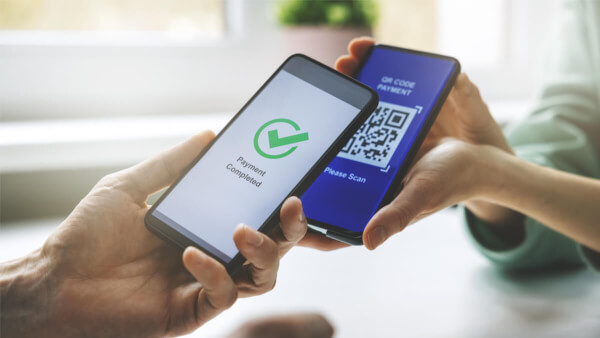
E-wallets like let customers pay by scanning a QR code or sending money straight from their wallet app. For the customer, it's fast and doesn't require a bank account. For the business, it settles quickly and cuts out card fees.
QR Ph is the Bangko Sentral ng Pilipinas' QR code standard. Its person-to-merchant system allows customers using participating banks or e-wallets to pay registered merchants through the same QR code.³
For many retailers, restaurants, food businesses, and other consumer-facing companies, accepting QR payments is now a practical part of a basic payment setup.
Bank transfers move money directly between accounts, and in the Philippines, that mostly means one of two systems: InstaPay and PESONet.
InstaPay clears in real time, 24/7, with funds credited almost instantly. For individual transfers, the standard cap is 50,000 PHP per transaction.4
In July 2026, BSP launched InstaPay for Business, allowing registered businesses to transfer up to 500,000 PHP per transaction, with no limit on the number of transactions or the total amount sent in a day. Businesses use it for both B2C payments, like payroll and insurance claims, and B2B payments, like vendor payments and intercompany transfers.⁵
PESONet works differently. It doesn't cap how much you can send. It credits the same day if you send before your bank's cutoff, or on the next business day.6 That makes it the better fit for payroll runs, bulk supplier payments, or anything large enough that speed matters less than the size of the transfer.
A payment gateway is the software that connects your website or app to banks and card networks. One integration can let you accept cards, e-wallets, and bank transfers without building a separate connection for each. That saves an online seller from having to build and maintain a separate payment connection for every option.
Payment links are useful when you need to collect payment without building a full online checkout. The customer receives a link, opens it, and completes the payment on the payment provider's page.
This can work well for social sellers and small businesses taking orders through Facebook, Instagram, WhatsApp, or other messaging channels. You can send a payment request without asking the customer to visit a full e-commerce site.

Checks are used for large B2B deals, government contracts, and transactions where a formal paper record matters. They're slow to clear and becoming increasingly rare outside those specific cases.
BNPL lets a customer split a purchase into installments through a third-party provider, who pays the business in full upfront and collects from the customer over time. It suits retailers selling high-ticket items, like electronics or appliances, where installments help close a sale a customer might otherwise walk away from.
With cash on delivery (COD), the customer pays the courier when the order arrives, not at checkout. This can reduce the hesitation a first-time customer may feel about paying an unfamiliar online seller in advance. The downside falls on the seller: if the customer refuses the package or isn't available to receive it, the seller absorbs delivery and return costs.
Most of the payment methods above are about how a customer pays a Philippine business. International payments solve a different problem. Relying on traditional bank wires for international transfers often exposes businesses to high conversion fees and unfavorable exchange rates.
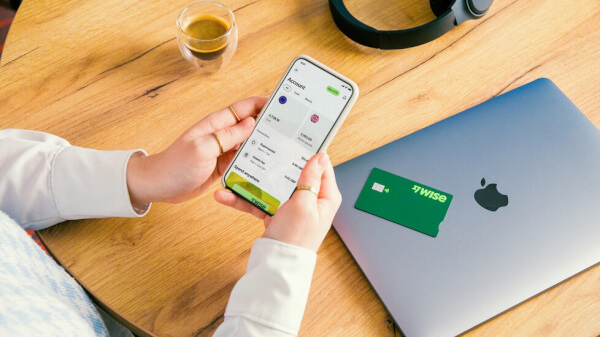
Wise Business helps solve this gap by providing local account details in major foreign currencies, so international clients can pay you just like a local business.


With a Wise Business multi-currency account, you can access over 8+ local account details — far more currency options than the handful most banks offer. Plus, Wise makes it easy to hold, send, receive, and exchange 40+ currencies from a single account.
With the freedom to send and receive payments in more currencies globally, you can focus on what matters most: growing a local business that knows no borders. Here's what you get with a Wise Business account:
➡️Get started with Wise Business today
Wise Pilipinas Inc. is regulated by the Bangko Sentral ng Pilipinas. You may visit the BSP website for more information about its regulatory framework and consumer protection policies. To reach Wise, visit help center here.
1. Which payment options should a small business offer?
No single combination works for every business. For small businesses, a sensible starting point is cash, at least a QRPh enabled e-wallet, and a bank transfer option for customers making larger purchases.
If you sell online, a payment link or online gateway may be more useful than investing in a physical card terminal. If you sell expensive products, cards, bank transfers, and BNPL may matter more.
Start with the methods your customers are already asking for, then add others as the business grows.
2. What's the difference between a payment method and a payment gateway?
A payment method is the way the customer pays. Examples include cash, cards, e-wallets, and bank transfers. A payment gateway is the technology that connects an online business with the systems that process those payments.
3. Are InstaPay and PESONet the same?
No. InstaPay clears in real time, with a 50,000 PHP per-transaction cap for individuals.⁴
Since July 2026, registered businesses can send up to 500,000 PHP per transaction through InstaPay for Business.⁵
PESONet doesn't cap the amount, but only credits the same day if sent before your bank's cutoff; otherwise, it lands the next business day.6
*Please see terms of use and product availability for your region or visit Wise fees and pricing for the most up to date pricing and fee information.
This publication is provided for general information purposes and does not constitute legal, tax or other professional advice from Wise Payments Limited or its subsidiaries and its affiliates, and it is not intended as a substitute for obtaining advice from a financial advisor or any other professional.
We make no representations, warranties or guarantees, whether expressed or implied, that the content in the publication is accurate, complete or up to date.

Learn how to manage international supplier payments from the Philippines. We cover top payment methods, exchange rates, hidden fees and key factors to consider.

Discover the top 10 international shipping companies in the Philippines, key factors, and ways to handle cross-border payment challenges.

Learn about invoice payments in the Philippines, essential fields for compliance under the Ease of Paying Taxes Act, and different invoice types.

Learn how to pay international contractors from the Philippines while exploring taxes, compliance, and low-fee tools.
Learn more about different payment methods available in Philippines and how to find the right solution for your business.
A practical Wise Business Card review for the Philippines covering everything MSMEs need to know about its fees, features, pros and cons.